Engineers who have already been in the room.
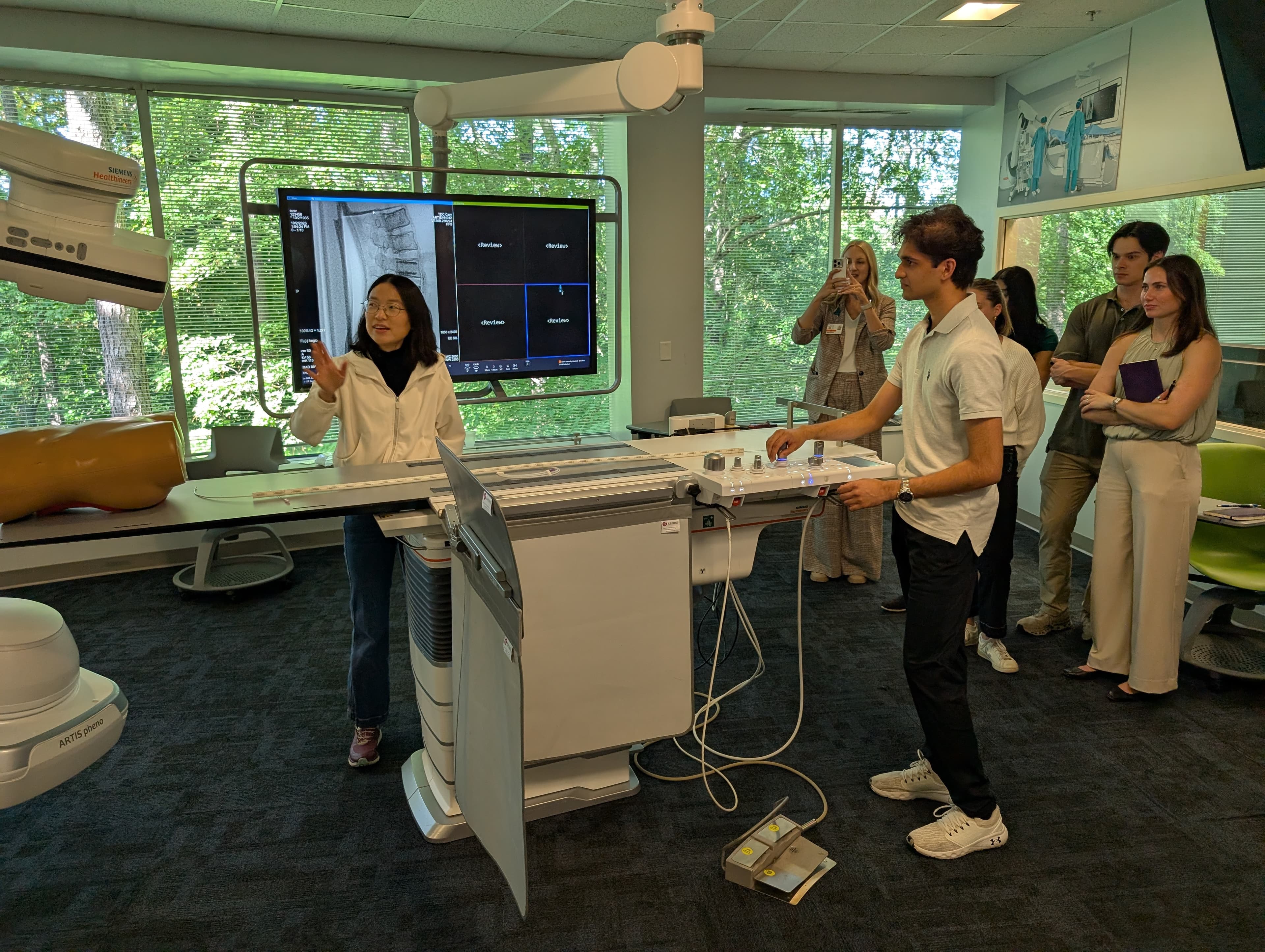
Our graduates spend their first summer watching clinicians work, and the rest of the year turning one of those observations into a device with a regulatory pathway. They already know how to develop products in a regulated environment, from user needs to V&V and beyond.
What they can do on day one
Root cause the problem
Students spend the summer in operating rooms and clinics before they design anything. They arrive able to tell a stated complaint from an actual unmet need, which is the part most engineering hires learn on the job.
Take a device from need to pathway
Over eleven months each student works one need through prototyping, verification planning, regulatory strategy and a manufacturing route. They have seen the whole arc once already.
Develop the regulatory & IP landscape
Predicate searches, product-code landscapes, standards, freedom to operate. Not as theory, but as the research that decided whether their own project was worth continuing.
Explain it to people who write checks
Every student pitches. Several have raised money doing it, at VenturePack, VentureWell, NC IDEA and SBIR.
Four ways to work with us
Guest lecture
Each course invites eight to ten speakers from industry. Share your expertise with the next generation of MedTech leaders.
Host an intern
Up to 32 hours a week during the fall or spring semester. Students arrive having already done clinical immersion and a summer side-quest design cycle.
Judge or sponsor the showcase
Network with 120+ industry experts, clinicians and investors while our students share this year's work.
Hire a graduate
The cohort finishes in early May, and 68% of the 72 graduates whose start date we hold were already in a job by then. Conversations that start in the spring semester tend to be the ones that land.