Sep 21, 2026 · 2 min read
A Chariot and a Swivel
This summer, alongside our clinical needs-finding work, we split the cohort into two teams for what we called "summer side quests" - real projects for local clinical teams.
Chariot for a TBI Patient
In the first project, which we lovingly named "Chariot", a TBI patient in a long-term care facility couldn't use any off-the-shelf leg support given his condition, and his physical therapists had improvised a clever interim fix. Our students spent eight weeks talking with the care team and the patient and building on what the PTs had already figured out. Our initial prototype missed the mark, but it taught us something: we should have iterated faster with cruder materials, earlier. The final version was sleek, comfortable, durable, and easy to clean, and the response from the patient and staff was everything we'd hoped for.
Missing Oxygen Tank Holders
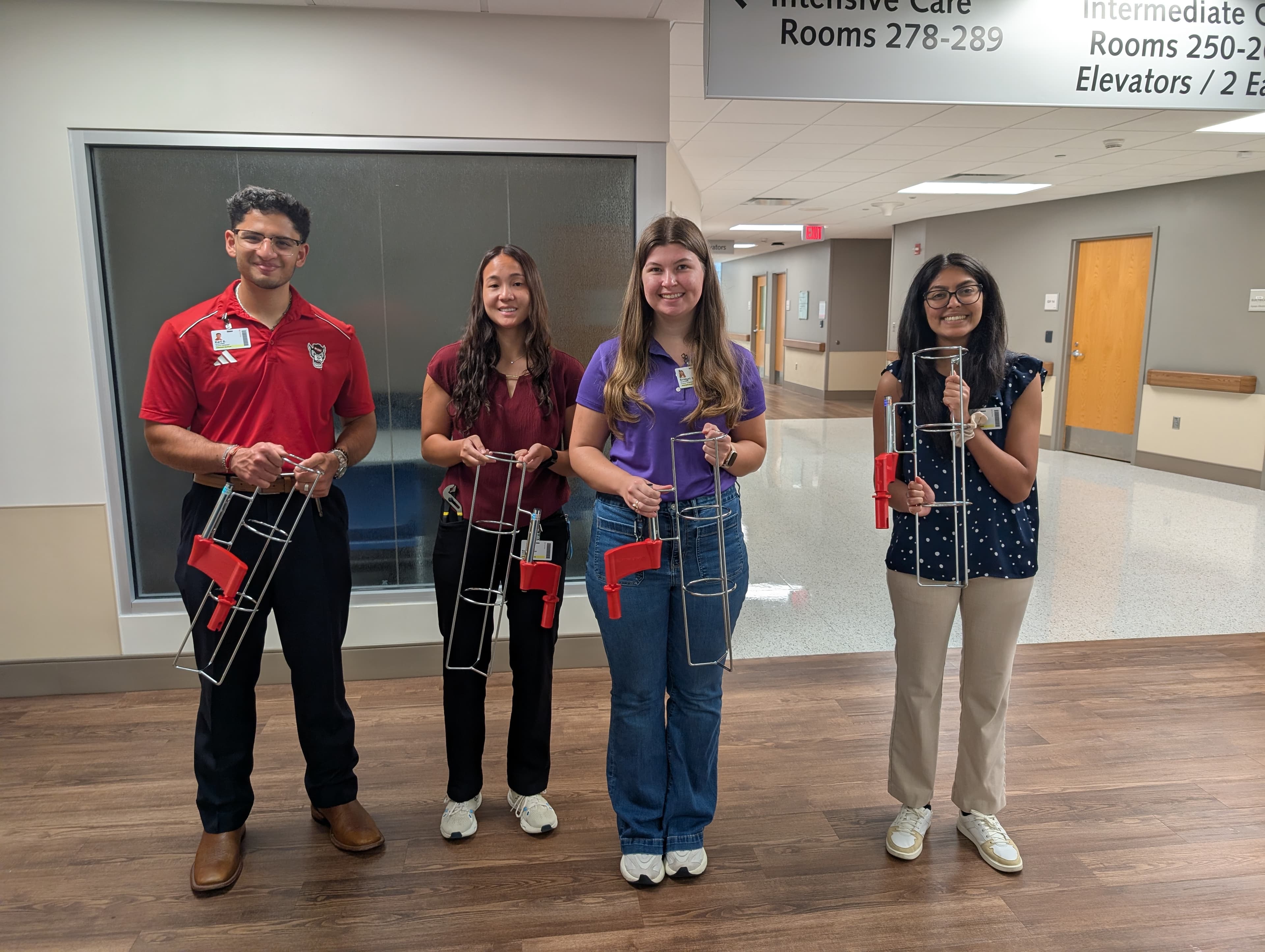
The second problem was a frustrating operational issue. At WakeMed Cary, the nursing and transport teams had 200 beds, 200 wire racks for oxygen tanks, and racks that were somehow never where staff expected them. Worse, tanks can get left behind entirely, hidden behind the headboard when a bed was pushed to the wall. Our students measured every bed variant on site, then designed a "swivel" mounting system that lets the rack sit where staff actually need it and locks it to the bed so it stops going missing. Working alongside the WakeMed Cary team, clinical engineering, and WakeMed Innovations, we delivered prototypes and a full documentation package (design outputs, analysis, risk assessments), so WakeMed could fabricate and roll it out site-wide if they choose to do so. We didn't just solve the problem - we handed them what they need to scale it without us.
Win-Win Situation
These quests give back to the clinical teams who share so much of their time during our needs-finding, and they quietly serve us too: our students get a real taste of the design process, deliver a genuine win, and get to know each other before we build fall teams. One project was about a single person's comfort. The other was about a system's friction. Both were about paying attention to people doing hard work, and trying to make it a little easier.